
Your shopping cart is empty!
Shopping Cart
0 item(s) - FreeCustomization and Conversion for: Ctrader, MetaTrader(MT4, MT5), Thinkorswim, NinjaTrader, MultiCharts, Tradingview, Prorealtime, SierraChart, etc.
License renew price will be 20% off for the 2nd year and after.
Every Purchase Comes with a Coupon.
Share Your Experience. Help Other Traders Learn. Get Rewarded.
Share Your Experience. Help Other Traders Learn. Get Rewarded.
Featured

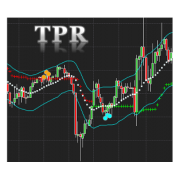

TPR Indicator – FAQ & Chart Guide
Frequently Asked Questions (FAQ)
1. What are the main inputs of the TPR indicator?
TPR has two primary inputs:
Period
The number of historical bars used to calculate the trend.
Factor
A multiplier that determines how far the uptrend and downtrend lines are placed from price.
In most cases, Factor values below 2 are recommended.
2. What does the Period input control?
The Period controls:
How smooth the trend line is
How quickly the indicator reacts to price changes
The effective trend timescale (short-term vs. long-term)
In general:
Smaller Period → faster reaction, more short-term signals
Larger Period → smoother trend, fewer reversals, more lag
3. What does the Factor input control?
The Factor controls:
The distance between the trend line and price
The sensitivity of the indicator
How tight or loose the implied trailing stop is
In general:
Smaller Factor → more sensitive, closer to price
Larger Factor → less sensitive, farther from price
When Factor ≥ 2, the indicator becomes significantly less reactive to short-term price movement.
4. Is there a “best” setting for TPR?
There is no single best setting.
The optimal input combination depends on:
Market type (FX, stocks, futures)
Volatility
Trend behavior
Timeframe
Your trading style (short-term vs. long-term)
The best inputs only exist under specific market conditions. No single combination works well in all environments.
5. Can I use different inputs on the same chart?
Yes, and this is highly recommended.
Using multiple TPR configurations on the same timeframe allows you to:
Compare short-term vs. long-term trend behavior
Identify dominant trend direction
Filter out weak counter-trend moves
6. Can I use the same inputs across different timeframes?
Yes.
Applying the same TPR inputs to multiple timeframes helps you:
Identify trend alignment or divergence
Judge whether short-term trends are supported by higher timeframes
Avoid trading against the dominant trend
Chart Explanation Guide
Chart Example 1: Small Period + Small Factor
Description:
When both Period and Factor are small, the trend lines stay very close to price.
Characteristics:
Very sensitive to price changes
Frequent trend flips
Suitable for short-term or scalping-style analysis
Chart Example 2: Same Factor, Different Periods
Scenario:
Factor = 1, Period = 20 vs. Period = 60
Observation:
Period 20: Trend line is closer to price and reacts faster
Period 60: Trend line is smoother and farther from price
Conclusion:
Period mainly controls the trend horizon and smoothness.
Chart Example 3: Same Period, Different Factors
Scenario:
Period = 20, Factor = 1 vs. Factor = 2
Observation:
Factor = 1: High sensitivity, quick reaction
Factor = 2: Lower sensitivity, fewer reversals
Conclusion:
Factor mainly controls sensitivity and stop distance.
Chart Example 4: Multiple Inputs on the Same Timeframe
Description:
Three 5-minute charts using different TPR settings.
Observation:
Short-range settings show multiple brief uptrends
Long-range settings show a consistent downtrend
Interpretation:
Short-term rallies exist, but the dominant trend remains bearish.
Chart Example 5: Same Inputs on Different Timeframes
Example:
100-tick, 200-tick, and 300-tick charts using the same TPR inputs.
Observation:
Uptrends appear on the 100-tick chart
No uptrend on the 300-tick chart
Interpretation:
Short-term uptrends may lack higher-timeframe support and may not persist.
Chart Example 6: Different Timeframes, Different Inputs
Observation:
5-minute chart turns bearish earlier
30-minute chart confirms the trend change later
Usage:
Lower timeframes can provide early signals, while higher timeframes act as confirmation.
Practical Takeaway
TPR does not know your trading objective.
You must adjust the inputs based on:
Your preferred timeframe
Your holding period
Market conditions
Risk tolerance
Finding the optimal settings often requires experimentation. The goal is not to find a “perfect” input, but to select inputs that consistently match your trading logic.
Copyright @ 2026 Patternsmart - All rights reserved
This website is for educational and informational
purposes only and should not be considered a solicitation to buy or sell a
futures contract or make any other type of investment decision. It's not recommended to use any single indicator as sole evaluation criteria. The companies
and services listed on this website are not to be considered a recommendation
and it is the reader's responsibility to evaluate any product, service, or
company. patternsmart is not responsible for the accuracy or content of any
product, service or company linked to on this website.
Futures trading
contains substantial risk and is not for every investor.Please read the following risk disclosure before considering the
trading of this product:
Futures Risk Disclosure. An investor could
potentially lose all or more than the initial investment. Risk capital is money
that can be lost without jeopardizing ones financial security or life style.
Only risk capital should be used for trading and only those with sufficient risk
capital should consider trading. Past performance is not necessarily indicative
of future results.
Trading stocks, options, futures and forex involves
speculation, and the risk of loss can be substantial.Investor must consider all
relevant risk factors, including their own personal financial situation, before
trading. Trading foreign exchange on margin carries a high level of risk, as
well as its own unique risk factors. Forex investments are subject to
counter-party risk, as there is no central clearing organization for these
transactions. Please read the following risk disclosure before considering the
trading of this product:
Forex Risk Disclosure. Spreads, Straddles, and other multiple-leg option
strategies can entail substantial transaction costs, including multiple
commissions, which may impact any potential return. Options are not suitable for
all investors as the special risks inherent to options trading may expose
investors to potentially rapid and substantial losses. Prior to trading options,
you should carefully read
Characteristics and Risks of Standardized Options.
patternsmart.com
will not be held liable for the loss of money or any damage caused from relying
on the information on this site. Any investment decision you make in your account is solely your responsibility.
TESTIMONIAL DISCLOSURE: TESTIMONIALS APPEARING ON OUR SITE MAY NOT BE REPRESENTATIVE OF THE EXPERIENCE OF OTHER CLIENTS OR CUSTOMERS AND IS NOT A GUARANTEE OF FUTURE PERFORMANCE OR SUCCESS.